カリスマ (1999) - 黒沢清
Charisma (1999) - Kurosawa Kiyoshi
Charisma is a film by Kurosawa Kiyoshi (no relation to the more famous Kurosawa Akira; the kanji of their last names are different). While it stands on its own as a particularly interesting work, it is also emblematic of everything great about Kurosawa's style and artistic vision. How do we describe Kurosawa Kiyoshi as a director? A lot of cinephiles have a bad habit of reverting to comparing everything slightly "weird" to David Lynch. But I would actually say that a better comparison point for Kurosawa Kiyoshi is David Cronenberg. Like Cronenberg, Kurosawa primarily works in the skeletal frameworks of genre pictures. Much of the details of his stories seem to have familiar beats and points from science fiction and horror traditions. But like Cronenberg, Kurosawa seems to intentionally use these frameworks as areas to experiment and really get under our skin in much more unusual and unorthodox ways. The comparison is not perfect, of course. Kurosawa's films lack Cronenberg's penchant for body horror and generally have atmospheres that are quieter and more still. There is also perhaps more of a persistent interest in nature than Cronenberg (though like Cronenberg, technology is a major theme). So while it would be a mistake to go so far as to call Kurosawa a "Japanese Cronenberg," I think a comparison to the Canadian director is in fact a good point to open up a discussion of Charisma and learn to appreciate it.
Kurosawa Kiyoshi has addressed the framework of ghost stories in Pulse, psychological crime thrillers in Cure, and family dramas in Toukyou Sonata (to name a few). Of course, these descriptions are laughably simplistic for what goes on in each of those films. These are frameworks that are toyed with in quite original ways. And Charisma seems to do something similar for the "eco-horror" genre. Its story is primarily one about humanity and the possibility of discovering the uncanny in the natural world. The film is a remarkable evocation of many issues related to population ethics, to our duty towards nature, and to our broader spiritual role as animals among others.
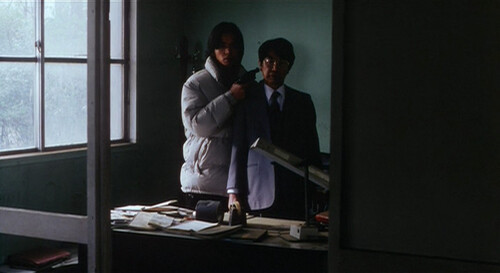
Enough preamble. Here is an outline of what Charisma is actually about. I will mark out a specific section for spoilers about the second half or so of the film, where things really get interesting. For that reason, I don't think your experience of the film will be negatively impacted if you read the following section. But I will be going into a lot of detail, so I urge you to watch the film yourself first if you are the type who likes to go in knowing as little as possible. The protagonist of Charisma is Yabuike, a veteran detective who is called in for the most important job of his life: negotiating with a criminal who has kindnapped a member of parliament and is holding him at gunpoint as a hostage. Yabuike and the captor have an intense staredown while police wait outside with guns in case things get ugly. The captor silently passes Yabuike a ransom note with his demand: "Restore the rules of the world." Yabuike then has a chance to shoot the captor and free the MP but hesitates and makes a tactical error. The captor instead is able to shoot the MP and kills him but is then shot and killed by the police in turn. Yabuike explains that he hesitated because he felt that there must have been a way to save both the captor and his hostage.
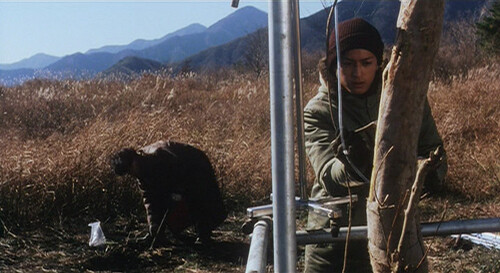
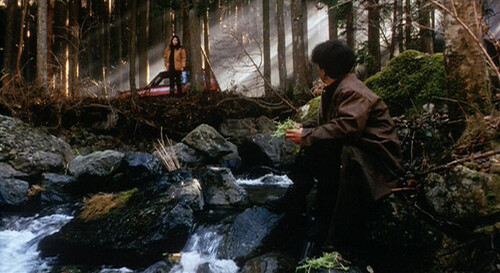
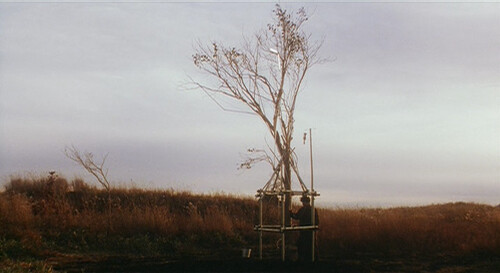
Yabuike is suspended in disgrace. He is driven out of Toukyou by a higher-up and is dumped on the side of a road in the middle of a forest in rural Yamanashi Prefecture. It's a little ambiguous if this is of his own will or a kind of mafia-style punishment. It is here that the main focal point of the plot emerges: an unusual tree in the middle of a clearing. The tree is being kept watch by a creepy, somewhat offputting and suspicious man named Kiriyama. Kiriyama is living in an abandoned sanatorium in the forest. Apparently, the tree was planted by the former owner of the sanatorium, who has now passed and who Kiriyama misses dearly. The tree appears to be in a weak state and needs a lot of maintenance from Kiriyama. But in spite of its feeble appearance, the tree is oddly beguiling. Kiriyama has come to nickname this tree カリスマ ("Charisma") because of this mysterious power. But things are not all so cheery. Yabuike learns that Kiriyama's menacing nature comes from his need to be on constant vigilance over Charisma. There are forces around him who want nothing more than to remove Charisma from the forest. But why?
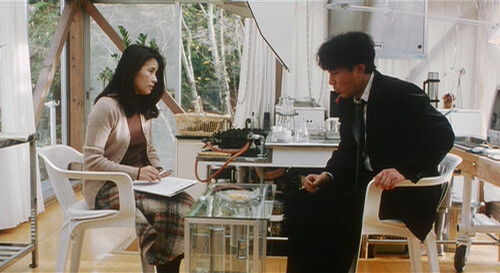
The answer comes when Yabuike meets Kiriyama's main rival: a scientist and ecologist who operates a lab and research station in the same forest named Jinbo. She explains that Charisma as a tree is alone in the clearing for a reason: the tree's roots are exuding a toxin which is slowly poisoning all the other trees around it. All the trees around it have withered. Charisma might appear weak, but looks can be deceiving. It is actually an apex predator, destroying all the other trees around it. Jinbo hypothesizes that if Charisma is left alone, it will eventually destroy the entire forest. However, something is very unusual about this state of affairs. Normally in response to such a threat, trees will evolve a defense mechanism and attempt to move away from it over generations. But the opposite is happening: all the trees in the forest are moving TOWARDS Charisma, seemingly intentionally throwing themselves off the metaphorical cliff. It seems that all the trees are just as "charmed" by Charisma as Kiriyama, even at the cost of their own lives. There are other forces at work against Kiriyama as well. Though not officially allied with Jinbo, a private militia has formed which seeks to remove Charisma for the sake of making the lives of forest workers tasked with cleaning up all the dying trees easier. There are also those who wish to uproot Charisma in order to sell it to a wealthy collector who is interested in its rarity and seeks to study its unusual properties in a safer environment.
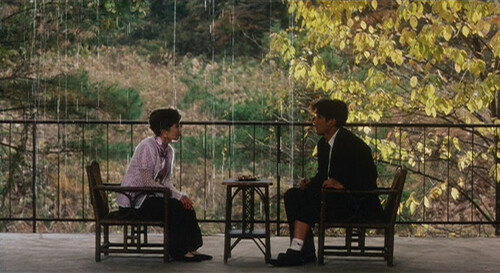
Such is the position that Yabuike is thrown in. And the failed negotiator now has a new situation to act as a mediator between: Kiriyama, who wants to save Charisma at the expense of the forest, and Jinbo, who wants to save the forest at the expense of Charisma. And once more Yabuike hesitates because he has the same instinct: "Isn't there a way to save both?" It becomes all-too-obvious at this point that Charisma and the trees are somehow an analogy for humans. But the exact message or point of this analogy is harder to grasp than it might seem at first glance.
As an immediate gut reaction, Yabuike's hesitation might seem hard to understand. When it comes to saving a single tree versus an entire ecosystem, how could we possibly choose the single tree, no matter how "charming" it was? He visits Kiriyama again after hearing the appeal from Jinbo, and Kiriyama states the following in one of the most important scenes of the film:
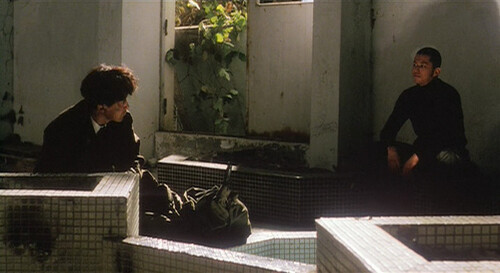
"What'd Jinbo teach you this time? 'Think about the forest, that tree is a monster' sort of thing? She's wrong. Dead wrong. That's just some theory invented by humans. The forest is a battlefield. All kinds of plants live and die. If Charisma alone survives, if that's the rule, that's just how it is, right? The strong survive, that's the rule here. I like it better that way. So you save the whole forest. You're only doing it for yourself. Good for quiet walks in the woods? What good is that? People only think of themselves. So self-serving. It's a complete mess."
While Kiriyama appears cold and brutal, he has a point. Jinbo wants to "save" the forest. But for whom? Humans' own sense of beauty. To Kiriyama, it seems as though she essentially views the forest as her personal garden. He finds this a kind of ecological imperialism which is deeply distasteful. And from what does she seek to save it? From the forces of nature itself. She seeks to guard it from just the thing she claims to be preserving: the natural world. The natural world is not a place of constant serenity and tranquility. To turn it into that is itself a betrayal of everything natural. But then, he ends the monologue with a chilling echo:
"My goal is to restore the rules of the rules of the forest. Which are probably the rules of the world."
The sinister implications of the words of the captor reappearing are too easy to spell out. It would seem that Kiriyama's "might makes right" philosophy can't be entirely correct either. But the implications for this "common sense" desire to protect the forest at all costs do imply a host of challenges of their own.
At this point, it is worth explicitly spelling out the problem of population ethics that Charisma seems to engage with on at least some level. Philosopher of ethics Derek Parfit put forward this ethical issue which has been called the "mere addition paradox" in his text Reasons and Persons. The problem is easiest to understand with illustrations:
Let's say that there is a world with 1000 people (A), all of whom are extremely happy. They live in a state of bliss that none of us could imagine. They spend all day long doing whatever your favorite thing is, for the sake of this exercise. We'll call this World-1:
World-1:

           ┌─┐
           │ │
           │ │
           │ │
AMOUNT     │ │
OF         │ │
HAPPINESS  │ │
           │ │
           │ │
           │ │
           │ │
           └─┘
           ────────────────────────────────
            A
What would happen if we added another group of 1000 people (B), all of whom are also happy, but not nearly as happy as A? The 1000 people in B are certainly quite happy. They are living lives that most of us would be envious of. But they aren't at the same level of absolute bliss as the people in A. We'll call this World-2. Would World-2 be a better or worse world tha World-1? An intuitive answer would be that it is a better world, as there is an overall larger amount of happiness in it. The total area covered by all the amounts of happiness here is larger. It's not evenly-distributed, but there is still a greater total amount.
World-2:

           ┌─┐
           │ │
           │ │
           │ │
AMOUNT     │ │
OF         │ │ ┌─┐
HAPPINESS  │ │ │ │
           │ │ │ │
           │ │ │ │
           │ │ │ │
           │ │ │ │
           └─┘ └─┘
           ────────────────────────────────
            A   B
However, an even better world would appear to be World-3, where the group A has a slightly lower level of happiness, but still a level far above the average person on earth today. World-3 has the greatest total amount of happiness and the highest average level of happiness per person out of the three:
World-3:

           ┌─┐ ┌─┐
           │ │ │ │
AMOUNT     │ │ │ │
OF         │ │ │ │
HAPPINESS  │ │ │ │
           │ │ │ │
           │ │ │ │
           │ │ │ │
           │ │ │ │
           └─┘ └─┘
           ───────────────────────────────
            A   B
World-1 has only 1000 people in it, all of whom are unimaginably, impossibly happy. World-2 has 2000 people in it, half of whom are unimaginably happy and half of whom are just "normally" happy. World-3 has 2000 people, all of whom have a level of happiness which is far above the earthly average, but doesn't quite have the same superhuman highs as World-1. So far, all of this seems pretty reasonable.
But things get more concerning when we consider World-4. Here we have the 2000 very happy people of World-3 (AB), but also another 1000 people (C), all of whom are just sort of happy. Their lives are just average and okay, nothing too special but they could be worse. If we continue with our assumptions, this world would be another improvement, as overall there is still a greater amount of happiness:
World-4:

           ┌─┬─┐
           │ │ │
AMOUNT     │ │ │
OF         │ │ │
HAPPINESS  │ │ │
           │ │ │ ┌─┐
           │ │ │ │ │
           │ │ │ │ │
           │ │ │ │ │
           └─┴─┘ └─┘
           ───────────────────────────────
            A+B   C
And now you can predict the next procedure. World-4 can be made even better with World-5, which again slightly reduces the highest highs of happiness, but increases both the overall amount of happiness and the average amount of happiness that everyone experiences:
World-5:

AMOUNT     ┌─┬─┐ ┌─┐
OF         │ │ │ │ │
HAPPINESS  │ │ │ │ │
           │ │ │ │ │
           │ │ │ │ │
           │ │ │ │ │
           │ │ │ │ │
           └─┴─┘ └─┘
           ───────────────────────────────
            A+B   C
And perhaps now you can see the endpoint of this way of thinking. With these seemingly common-sense presumptions, the "best" world possible would be one with an unimaginably large number of people all living lives that have a very small amount of happiness. We would have trillions upon trillions of people, all of whom have lives that are just barely worth living. As long as the number of people is great enough, there would still be an overall greater amount of happiness in World-X than in any of the worlds we've sketched out above:
World-X:

AMOUNT
OF
HAPPINESS


            ┌─┐ ┌─┐ ┌─┐ ┌─┐ ┌─┐ ┌─┐ ┌─┐ etc.
            └─┘ └─┘ └─┘ └─┘ └─┘ └─┘ └─┘
           ───────────────────────────────
             A   B   C   D   E   F   G  ...
Parfit famously called this the "repugnant conclusion" of the argument, as it seems like something has obviously gone wrong. But it is very hard to argue what that something is, when World-X exceeds all others both in terms of total happiness and in the average distribution of it.
And perhaps now we can understand Kiriyama's point a bit more. Parfit argued in terms of happiness here, but in the case of Charisma, it might be better to think in the more broad philosophical sense of eudaimonia. While trees probably can't experience anything like we would consider "happiness," they can be marvelous and "charismatic" for sure. They can be excellent in their own way as trees. And this is Kiriyama's conclusion. With Jinbo's intervention, the forest will become a collection of extremely unremarkable, "average" trees that do not stand apart from each other. Charisma has managed to raise itself above all other trees. The trees themselves willingly draw near it, sacrificing themselves in recognition of its brilliance. Kiriyama says: May Charisma shine forth in its brilliance. May there be a tree so marvellous that it is worth sacrificing the entire forest for.
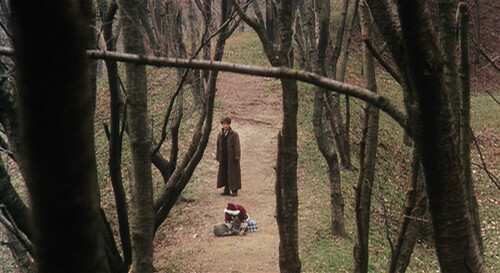
Parfit's "happiness tables" can look a bit abstract, but the metaphor of the trees does help bring the human element of this into view. We can think about all the great flourishing that has been accomplished by humans over their lifespans. Name whatever great example of human flourishing you want: Homer's Iliad, the philosophy of Plato and Aristotle, the plays of Shakespeare, the symphonies of Bach, vaccines, the internet, the sequencing of the human genome, the missing pantsu episode of Strike Witches... It exists in virtue of some level of inequality. Those who had the time to devote to the making of such offerings to the temple of human flourishing did so because they had the time to spend to do so. They didn't have to dig rare earth metals out of hellish mines in the Congo and screw them in for 12 hours a day in a Chinese sweatshop. But what is the alternative? To forgo everything higher? Even if some of those inventions we get could very much help alleviating the very miserable conditions that led to their creation?
It is worth remembering that this film is Japanese and that traditional Japanese society is animist: Shintou beliefs teach us that there are spirits in all objects. And one of the most commonly-deified natural objects is a tree. Tree worship is ancient in Japan. But even in these cases, there is a hierarchy. All trees have spirits, but not all trees are marvelous enough to get roped with a shimenawa and have a shrine erected around them. I bring this up because the idea of a tree being marvelous is by no means something merely eccentric here. We could in fact argue that Kiriyama has a deeply Shintouist spirit and that he has looked to the natural world and discovered something truly spiritually resonant when mere scientists like Jinbo have merely looked at the forest as something to be toyed with, a kind of garden for us to keep as our plaything. To use the phrasing of Heidegger, Jinbo looks at the forest as standing-reserve, but Kiriyama is still open to its poiesis.
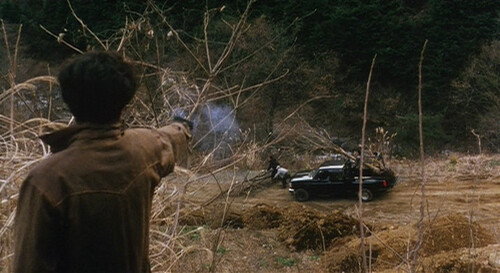
Yabuike has some sympathies for both Kiriyama and Jinbo. But he reluctantly continues to help Kiriyama safeguard Charisma and prevent it from being felled. Of course, he doesn't do so because he has gone to the extreme of Kiriyama. He doesn't want the forest to be sacrificed. His answer is the same as the hostage situation: There must be some way to save both. It seems hopelessly naive and is mocked by both Kiriyama and Jinbo. And yet, it seems that it is the only correct answer. Even when it seems impossible or contradictory, we have to try to save both the individual and society at large. We have to have both freedom and harmony. We have to save both Charisma and the forest.
!!!---SPOILERS FROM THIS POINT ON---!!!
A dizzying series of twists and turns occur over the fate of the tree, ultimately leading to the film's strange and very ominous ending. Eventually, Charisma is successfully uprooted and captured by the militia after they take Yabuike and Kiriyama by surprise. The militia ties Charisma to the top of their car and make a getaway. But Kiriyama and Yabuike have thought ahead. The two block the road with a large log and, when the militia are busy trying to remove the log, Yabuike ambushes them from afar and scares them off with gunshots. Kiriyama hijacks their car and drives Charisma back to the clearing. However, Jinbo and her younger sister Mitsuko then reverse-ambush Kiriyama, bash him over the head with a shovel, and set fire to Charisma. Kiriyama tries to save it, but it is too late. For a moment, it seems as though the goal of saving both is as good as gone. Charisma has been sacrificed and the forest will live.
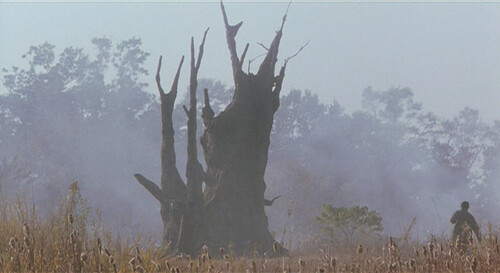
But things are not so simple. The following day, a new tree has emerged in Charisma's place. It is also a dying tree that seems to be collapsing in on itself. But it is MASSIVE, with the circumference of an old redwood. It is not at all the unassuming little tree that Charisma was. Kiriyama is disaffected and doesn't feel the same attachment towards this new tree, "Charisma 2.0," let's call it. The tree he cared the most about, Charisma, is now gone. But Yabuike takes his place and becomes obsessively attached to preserving and safeguarding Charisma 2.0 instead. Jinbo's younger sister Mitsuko is upset with Yabuike's strange obsession with the tree (she seems to have something of a crush on him and is upset at his constant liaisons with Kiriyama). When she lashes out at the tree and (feebly) attempts to destroy it with a rock, Yabuike pushes her away and then summarizes his view of the situation:
Yabuike: "If you had to choose between one special tree and the whole forest, which
would you choose? It's a very difficult question. But there's really only one answer.
Both have to survive. The will to live and the will to kill are the same. So your
sister says. So, what to do? If one lives, the other dies. If both try to live, both
may die. There is no right answer. Or rather, the problem is in the way the question is
posed. Both are trying to live, so both should live. That's the way things are. If each
kills the other, it means extinction. That's also how things are. But that would mean
chaos. Kiriyama says that rules and force can prevent that. That was my line of work. I
did it without a second thought. But I finally understand. I'm fine just as I am, an
average man. That's plenty. There weren't any special trees and there wasn't any whole
forest. Just a lot of average trees growing everywhere. That's all there ever was."
Mitsuko: "Then, what is it that you're trying to do?"
Yabuike: "Letting some live, killing others. Just the way things are."
Mitsuko: "I can't understand."
As Yabuike says this, one tree tips over in the background. It seems that Charisma 2.0 is starting to wreak its effect on the trees around it. The old battle over the tree reappears with Yabuike in the role of safeguarding Charisma 2.0 instead of Kiriyama. Charisma 2.0 is still valuable enough that the collectors return and offer Yabuike 10,000,000 yen for it. He says that they can do as they wish to the tree and he will not try to stop them, but that he doesn't need the money. Jinbo then comes to the clearing with explosives and Yabuike doesn't try to stop her either, allowing her to blow the tree up. He says "I think this is only the beginning" and notices that in the center of the tree's dead remains there is a small sprout still connected to the ground.
One of the collectors returns and holds a knife to Jinbo's throat, demanding that Yabuike hand him the sprout so that he can still sell it and make his profit. Yabuike is confronted with the same situation as in the beginning of the film: a captor and a hostage. And here, he accomplishes what he wanted. He saves both. Namely, he shoots the captor so will be wounded but not fatally. Then he wraps up the wounded captor and begins to carry him back to the nearest city to get him to a hospital. The final scene shows Yabuike on the edge of the city with the wounded captor. He pulls out his cell phone, answers it, and the following exchange takes place:
Yabuike: "Hey, boss."
"Boss:" "Yabuike? What have you done? What on earth have you done?"
Yabuike: "I'm returning now."
The last shot of the film shows the city in the distance, completely engulfed in flames. We see helicopters flying overhead and hear sirens, gunshots, and the sounds of destruction.
!!!---SPOILERS END HERE---!!!
I love this ending because of how strange and unexpected it is. And I can't possibly give the only possible interpretation. But this is what I personally take from the film: Yabuike achieved what is called "wu-wei" in Daoism. He learned that the whole choice of whether to save Charisma or the forest wasn't really his to make. The hardest possible thing we can do in times of extreme crisis (especially ecological ones) is to let go and embody our trust in the natural world. And there is perhaps no profession more antithetical to this than Yabuike's: a policeman, the symbol of exterting law and order over the chaos of society. But that is precisely what Yabuike does. He doesn't become apathetic, of course. He works with people and does what he thinks is best. But he learns to do so in a way that is natural and not to force his will on the world. He learns to let the primal struggle emerge and to let it flow dynamically and creatively. And in doing so he manages to right his wrong from the beginning: He "saves both" against all odds. I take the very last scene to represent the whole world ending and collapsing in on itself in chaos precisely because others have lost this ability to move and live "with" the world of nature instead of trying to impose their will on it.
This is not the only possible interpretation. One might interpret it as some kind of havoc wrought by leaving Charisma 2.0 alive, as if the toxins have spread to human civilization. Or by destroying it, humans have denied the emergence of a new god who was setting the stage for something greater than any of us could have imagined. I can't tell you what the film means, but I absolutely encourage you to watch it and think it over with me. Because the film itself is truly a beguiling and marvelous specimen as much as Charisma is.